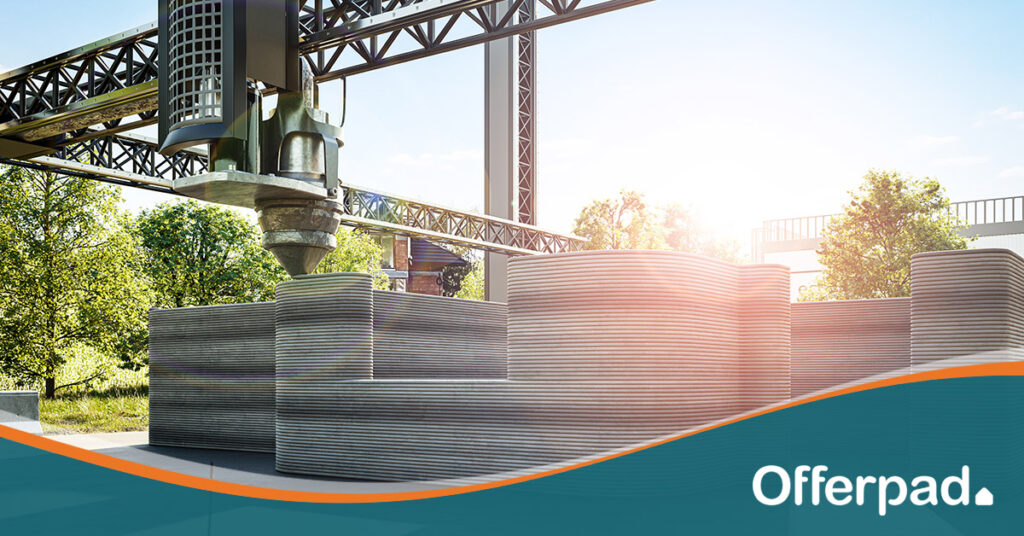
Imagine if you will. You are about to enter another dimension … a third dimension, to be exact. A journey into a wondrous neighborhood where we challenge the perceptions of building the home of the future.
Next stop: the 3D-printed home.
What are 3D-printed homes?
Once found only in the realm of science fiction, 3D-printed homes are very much becoming a reality here in the United States and around the world. And they’re starting to go mainstream.
In fact, a community of 100 3D-printed homes, the world’s largest, is currently being built near Austin, Texas. Part of a larger, traditional community of homes, the new 3D neighborhood is a collaboration between Texas construction firm ICON, homebuilding company Lennar and Danish architecture practice Bjarke Ingels Group (BIG). The 3D-printed homes range in size from 1,500 to 2,100 square feet with three to four bedrooms.
RELATED READ: Look inside the world’s largest 3D-printed neighborhood in Texas | CNN

How are they constructed?
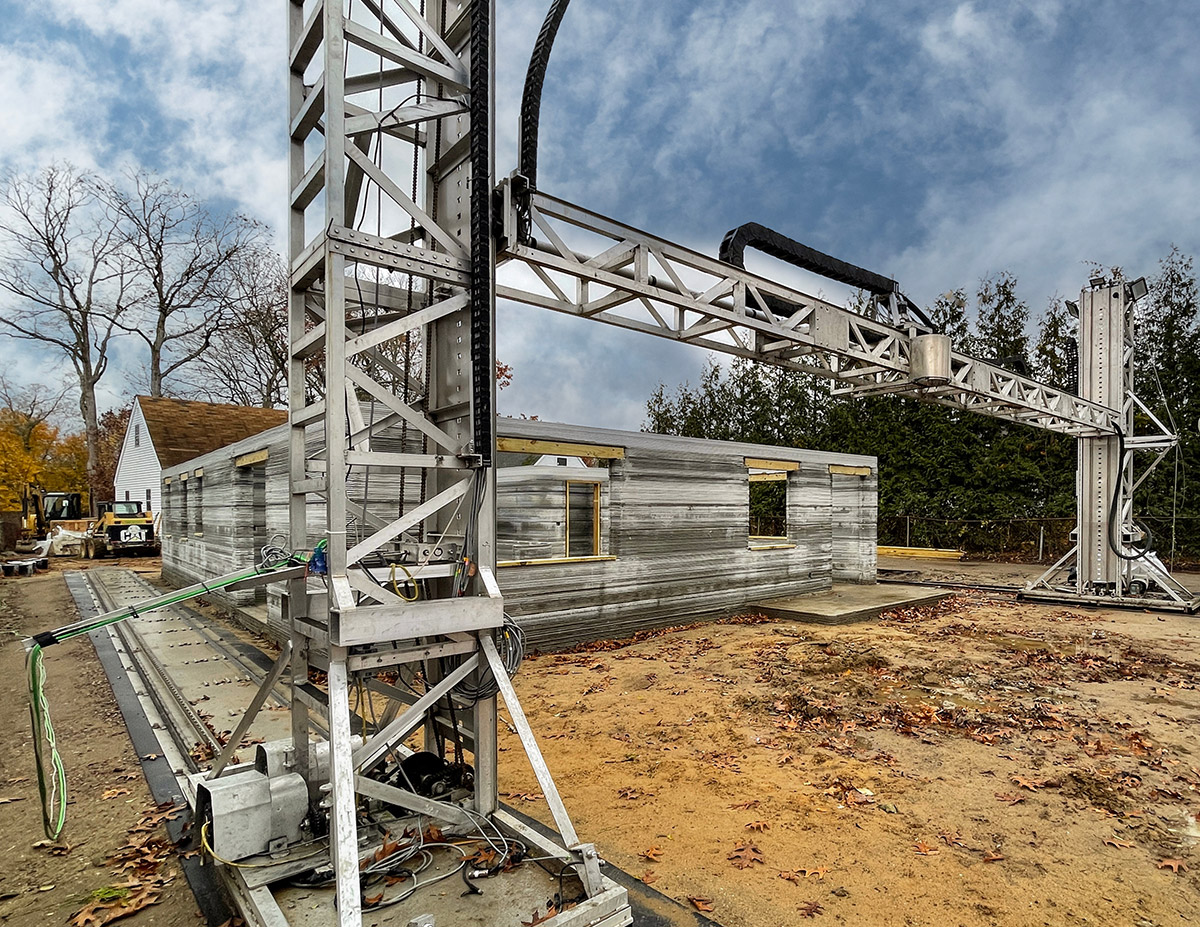
In the home-build business, 3D printing (also called “additive manufacturing”) is the process by which digitally-designed homes are built in the field using construction 3D printers – either a gantry system (like oversized desktop 3D printers with X, Y and Z axes) or one with robotic arms – that pour, or “print,” building material layer by layer.
We’re not talking your mother’s inkjet printer either. These things are massive! Three-dimensional printers used in home construction often weigh several tons and tower several stories high to print in a variety of shapes and sizes, giving architects endless design possibilities.
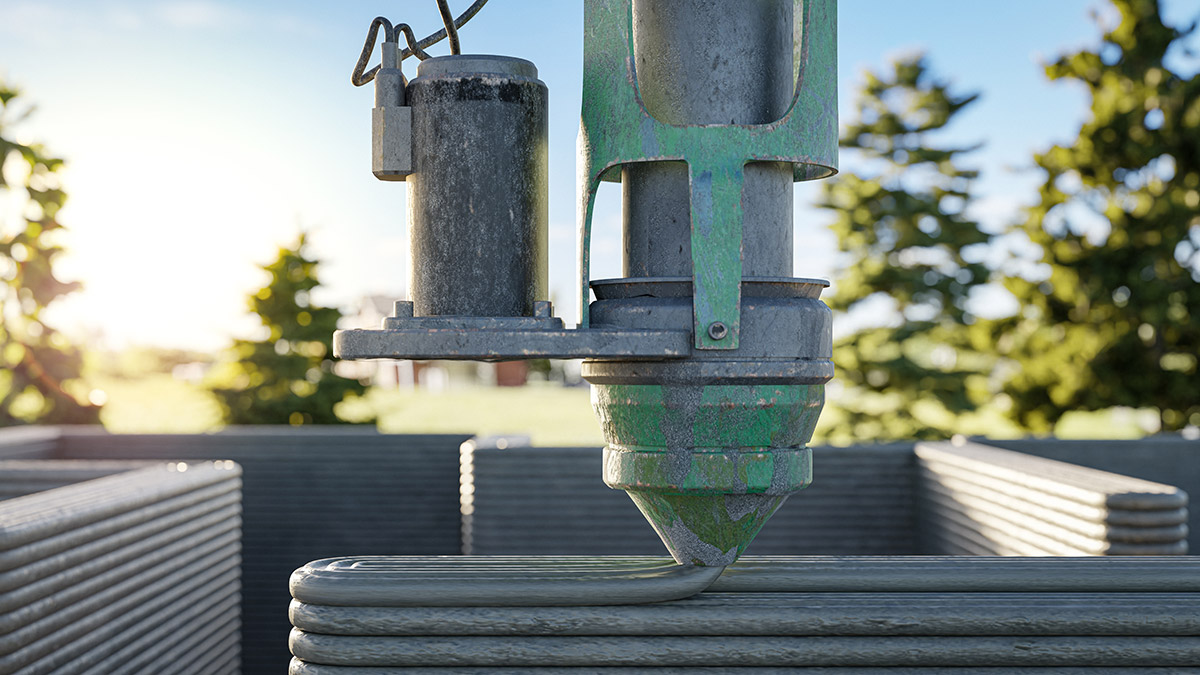
Depending on the project, 3D printed homes are constructed using a variety of materials. The most common is 3D printing concrete, which is a mixture of fibers, cement and other ingredients combined with water. Other materials used in build mixtures include synthetic polymers, castable clay, mortar and even old, recycled plastic.
The concrete is mixed with a special additive that is extruded through a nozzle and layered to create walls, floors and roofs (in some cases). The home’s remaining components and features – doors, windows, plumbing and electrical, and other fixtures – are put in place using traditional construction techniques.
At the foundation, building a 3D-printed house typically starts with:
- Designing a blueprint: As with building any home, the first step in building a 3D-printed house is designing a blueprint using a computer-aided design (CAD) modeling software program.
- Slicing the design into layers for the printer: The design is programmed into the construction printer, which is delivered to and assembled for use on the build site.
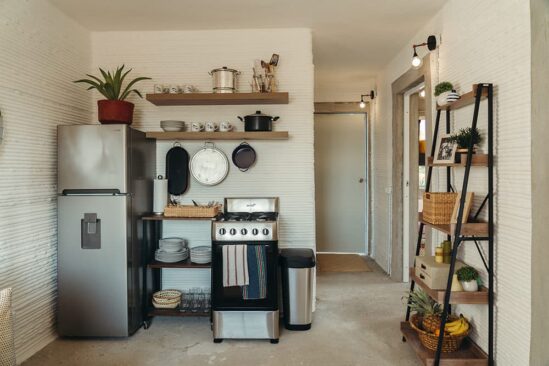
- Hitting ‘print!’ Versus a full construction crew, it usually takes only one or two operators to guide and monitor the printer as it prints each layer, one at a time, until the house is complete. Depending on the size of the home, printing can be completed in just hours, as in these small 3D-printed homes built in Mexico.
How long will a 3D-printed home last?
That depends entirely on the printing material used. Concrete blocks used in conventional home construction, for example, typically last at least 100 years, so you could probably expect a 3D-printed house using concrete to last about as long, depending on how well the home is maintained overall.
3X the benefits
3D printing offers the chance to build houses faster, more accurately and cheaper than ever before. Compared to typical home construction timelines which can take seven months or more to complete a single-family home, 3D printing can help reduce total build times to days or weeks.
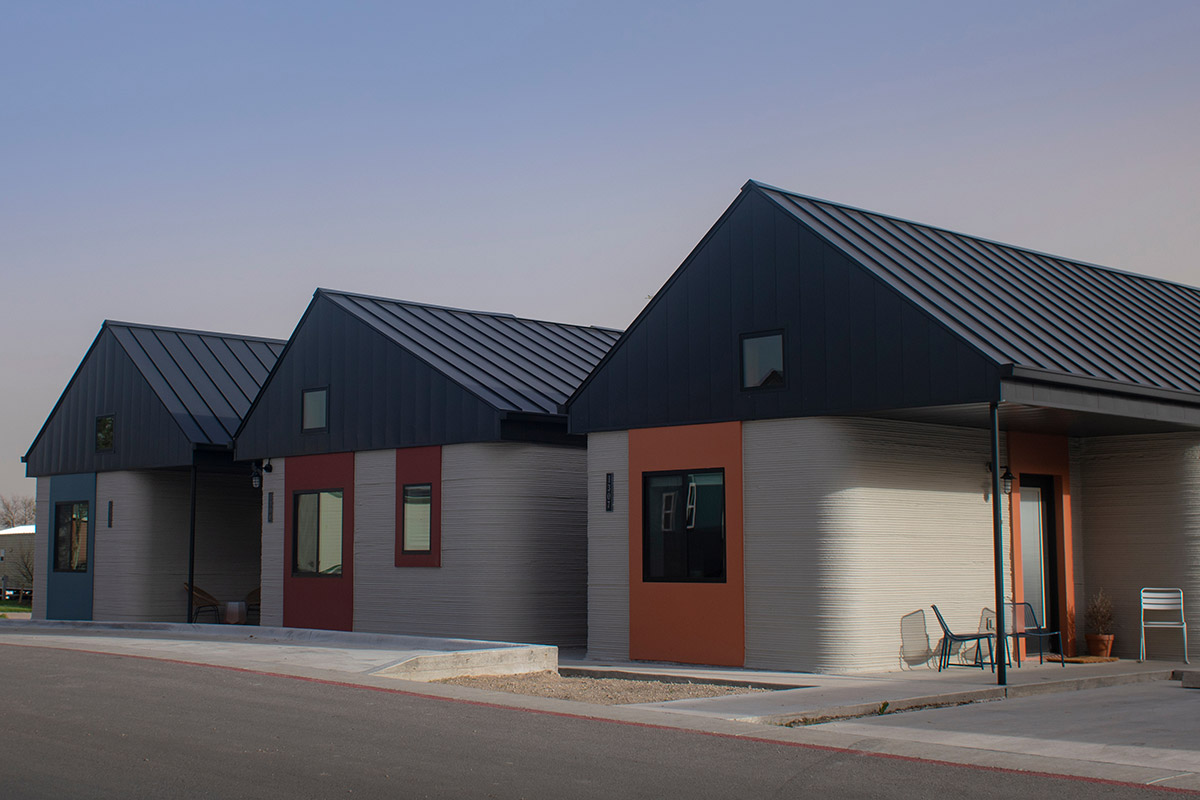
Many recognize this market-disrupting building method as both an effective, time-saving and cost-efficient way to address the current housing shortage and high demand. Habitat for Humanity, for instance, has partnered with 3D construction companies in Arizona and Virginia to help address the critical issue of home affordability in the U.S.
The use of 3D printing in home building has many other advantages, too:
- Decreased material and labor costs, which can lead to more affordable housing for home buyers and increased profits for builders.
- Construction of more energy efficient homes. Traditional square-shaped buildings can be replaced by rounded walls, which have been found to minimize humidity and thus require less cooling.
- 3D-printed homes can be quickly constructed to provide shelter following natural disasters or used to combat homelessness.
Would you live in a 3D home?
We would! Especially if it looked like this one.
Interested in buying a 3D-printed home? Good news! Fannie Mae just updated their guidelines to allow 3D-printed homes built with conventional building materials to be considered “traditional” site-built housing. That means they’re eligible for conventional financing through lenders like Offerpad Mortgage LLC.
So, if you’re imagining yourself as the future homeowner of a new 3D-printed home (or other kind of unique build, including geodesic dome homes, container homes, log cabins and more), Offerpad can give you the keys to unlock your imagination and help make home ownership a reality. We can help you do literally (almost) everything to meet your real estate goals – today and in the future.
Buy? Sell? Loan? Getting started is easy. Just tap here.