A kitchen needs storage as much as appliances, so it’s reasonable to expect that when the time comes to add, update, or outright replace the cabinetry in the heart of your home, there’ll be a literal price to pay.
As with any question of home improvement pricing, there’s a spectrum of costs to consider when installing kitchen cabinets. How much you’re willing to spend is just one of many factors that influence the final total.
Rather than leave you to fend for yourself, here’s a breakdown of the things you need to know about cabinet installation costs from the team at Offerpad, so that any decisions you make for your own home begin from a place of knowledge.
What Impacts Costs?
First, you have to appreciate the variables at play in terms of cabinetry costs. Without these, averages are meaningless.
The main drivers here are:
- The type of cabinet you pick. If you’re happy with an off-the-shelf option from a mainstream retailer, or a ready-to-assemble (RTA) package from a mass market brand, you’ll make the most significant savings. If you want or require partially or wholly customized cabinets, prices will rise substantially.
- The size of your kitchen. The more wall space you have to fill, the more material and labor are involved in creating your ideal cabinet setup.
- What your cabinets are made of. Budget options made from materials like MDF and plywood are plentiful. Softwoods like pine and hardwoods like oak are potentially sturdier but also more expensive. Since 42% of people choose to remodel their kitchens because they’ve grown sick of the sight of their existing setup, the look and feel of these materials must be carefully considered.
What Are the Averages?
There’s no cut and dry way of working out how much you’ll pay for cabinets in your kitchen without getting a professional installer over to give you a quote. However, some top-level averages can be extrapolated from the various providers and sources that advertise online to provide you with a sense of what to expect:
Stock/RTA Cabinets
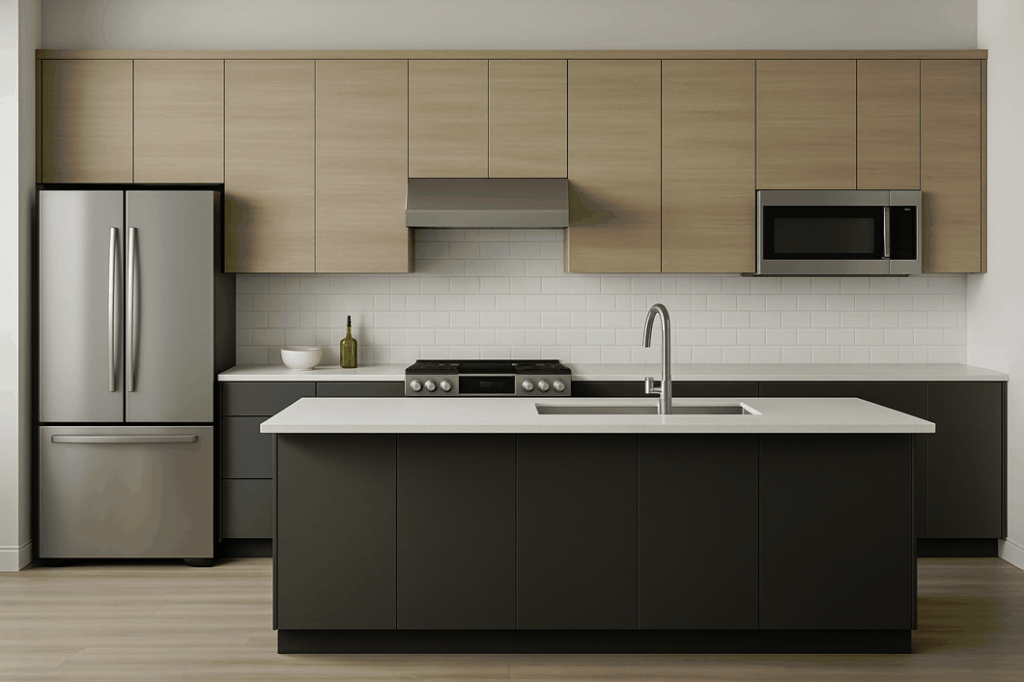
At the lower end of the market, you can pay as little as $100 per linear foot for ready-to-assemble or pre-assembled cabinets, although mid-to-high-end examples will be closer to $300 per linear foot. The materials are inexpensive, and the amount of labor required to fit them is modest because they are essentially equivalent to flat-pack furniture, making up the bulk of an $80.72 billion global market. It’s reasonable to assume that the cost for fitting a typical kitchen will be anywhere from $4,000 to $9,000.
Semi-Custom Cabinets
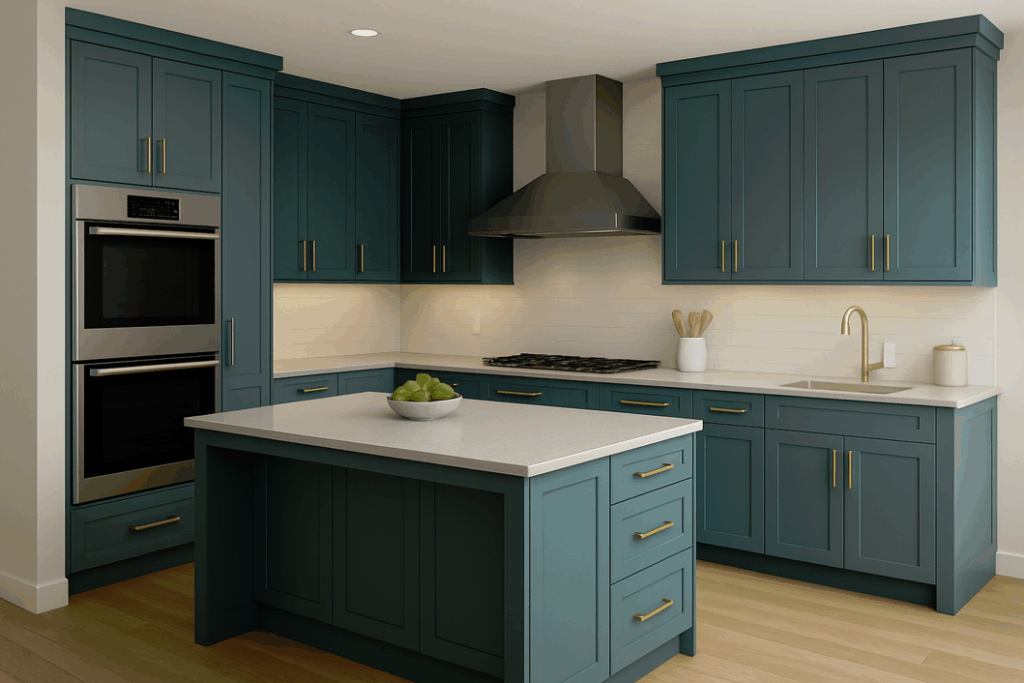
This category of cabinet is adjacent to RTA products, but comes with increased material and labor costs because a degree of customization is possible. Linear foot costs kick off at $400 here, and can climb to $600 if you go all-out. Again, you’ll need a budget of at least $6,000 to consider this route, although larger spaces or more elaborate semi-custom cabinetry could push you north of $15,000.
Custom Cabinets
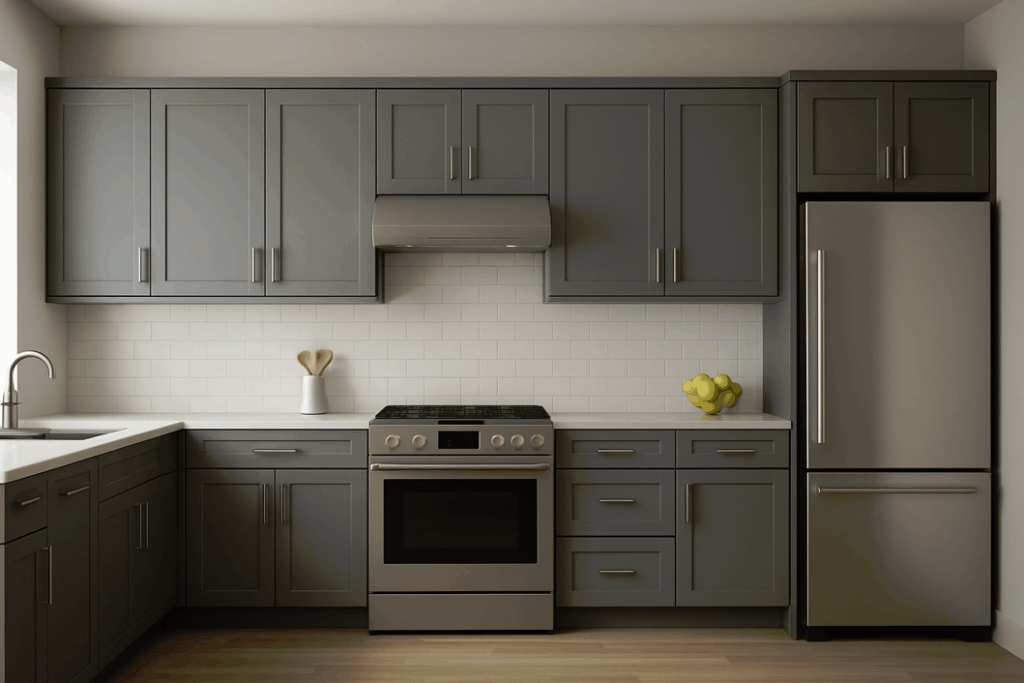
The completely custom approach to installing kitchen cabinets is understandably pricey, with linear foot costs of $500 at minimum to be expected. Paying over $1,200 per linear foot is not unheard of. Again, averages are highly variable for the aforementioned reasons, and budgeting $20,000 or more is advised.
What Else Influences Cabinet Installation Costs?
If you’ve found the prices we’ve quoted for average kitchen cabinet installation a little eye-watering, don’t forget that there are a couple of other aspects to weigh up.
Chiefly, the cost of labor in your region holds sway over the final price more than you’d think. There may be more competition in major urban centers, but other associated costs of doing business will also be higher, so labor costs typically sit at the upper end of the scale. Meanwhile, less heavily populated places might be better served in terms of cost-effective labor.Additionally, with stock and RTA cabinetry, you can perform the installation work yourself, thereby eliminating hundreds or even thousands of dollars from the final cost. People who are handy with a drill, screwdriver, saw, and measuring tape might see this as the path to affordable kitchen renovations.
Final Thoughts
In sum, it’s difficult to install new kitchen cabinets without spending at least $4,000, unless you take care of the labor yourself rather than bringing in contractors. The higher-end materials and more complex, large spaces will inevitably cost much more.
Even so, the end result will be worth it so long as you think carefully about what you want, budget for what you can afford, and find reputable installers to get this project over the finish line.
How to Prepare for Kitchen Cabinet Installation
If you’re planning to install new kitchen cabinets, the following steps will ensure the installation process is straightforward and efficient:
- Measure your space: Accurately measure the dimensions of your kitchen, including wall heights and lengths. Note the locations of appliances, outlets, plumbing, and windows to determine where cabinets will fit best.
- Set a budget: Decide how much you’re willing to spend on materials, labor, and any additional expenses like hardware or finishing touches. Knowing this upfront helps guide your choices.
- Choose cabinet type: Research stock/RTA (ready-to-assemble), semi-custom, or custom cabinetry options based on your needs. Factor in aesthetics, functionality, durability of materials (e.g., MDF vs. hardwood), and overall cost.
- Decide on DIY or professional help: Determine whether you’ll handle the installation yourself or hire professionals. Keep in mind that while DIY may save money initially, experienced installers can guarantee precision work.
- Order in advance: Cabinets often take time for manufacturing and delivery, especially custom orders, so plan accordingly if you have a timeline for completing the project.
- Prepare the area: Clear out existing cabinets if applicable. Empty counters completely and remove anything obstructing walls or floor areas where new cabinetry will go.
In short, preparing thoughtfully beforehand and budgeting realistically will keep this home improvement project productive and painless.
Frequently Asked Questions About Kitchen Cabinet Installation
How long does it take to install kitchen cabinets?
The timeline depends on the type of cabinetry and whether it’s a DIY or professional installation. Stock or RTA (ready-to-assemble) cabinets can often be installed in one to three days. Semi-custom and custom cabinets may take longer due to additional adjustments, complex designs, or required finishing touches.
Can I install kitchen cabinets myself?
Yes, especially if you’re using stock or RTA options designed for easier assembly. However, proper tools and experience are necessary to ensure precise alignment and secure fittings. For semi-custom or custom projects involving intricate details, hiring professionals is typically recommended.
What’s the best material for kitchen cabinets?
The ideal material depends on your budget and preferences. MDF (medium-density fiberboard) is affordable but less durable than hardwoods like oak or maple, which offer greater longevity but come at a higher price point. Softwoods such as pine strike a balance between cost-effectiveness and sturdiness.
How much does labor usually cost?
Labor costs vary based on region and project complexity, but generally range from $67 to $125 per hour. For an average-sized kitchen with stock cabinets, expect labor fees between $2,000–$4,000, depending on how many hours are required.
Do I need permits for cabinet installation?
Typically, no permits are needed unless structural changes, like removing walls, are part of the renovation plan alongside cabinet replacement. Always confirm with local building codes if you’re unsure.